AI for Interior and Architectural Photography
A conversation with a second-generation photographer who has spent 30 years shooting for Gucci, Rolex, and Louis Vuitton — and is now teaching AI to creative professionals while thinking hard about what authenticity means in an AI-assisted world.
- AI is changing photography operations more than the photography itself. For Brian, the biggest gains are in the business layer — proposals, contracts, client communications, scheduling — not in the image capture or editing.
- Teaching AI to creatives requires meeting them where they are. Brian and Jenna both find that creative professionals resist AI when it feels like a threat to their craft identity, but embrace it when it is framed as a tool that handles the parts of the work they do not love.
- Authenticity in your digital presence matters more now, not less. When AI can generate any content, the signal of your real work — real rooms, real projects, real voice — becomes more valuable, not less.
- Luxury brands and high-end clients still hire humans for a reason. AI imagery cannot replicate the trust, relationship, and real-world technical execution that a seasoned photographer brings to a shoot. That gap is where the work lives.
- The design and photography communities need each other more as AI evolves. Both are grappling with the same questions about what their work is worth in a world where AI can approximate it — and those conversations are better had together.
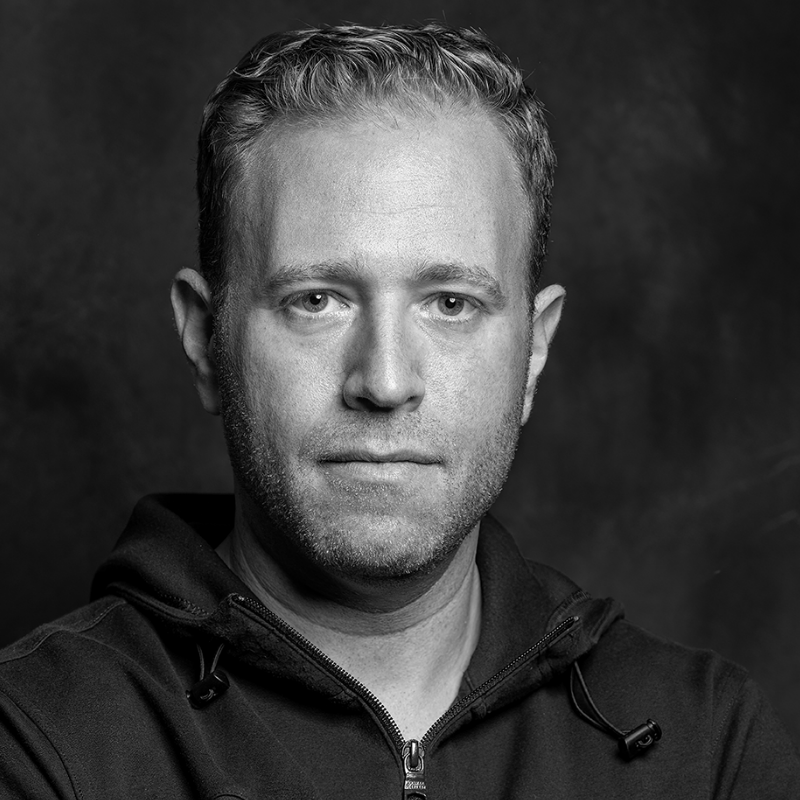
Brian Berkowitz is a New York-based, second-generation photographer with 30 years of experience in architectural, retail, and interior design photography. His client roster includes Gucci, Rolex, Louis Vuitton, and Chanel — brands that demand technical precision and creative alignment at the highest level. A member of the IDS Long Island chapter, Brian also produces and hosts the IDS Long Island Podcast and travels widely for shoots across North America.
Who Brian Berkowitz Is and Why This Conversation Matters
Brian Berkowitz is not a photographer who dabbles in interior design work. He is a specialist with three decades of experience in the precise, high-stakes intersection of architectural space, designed interiors, and luxury brand identity. When a room has to look exactly right — because the image will appear in a Gucci lookbook or on the wall of a flagship Rolex store — Brian is the person in the room.
His client list reflects that positioning:
What makes this episode particularly useful is that Brian is not just a practitioner — he is also teaching AI to creative professionals through his work with IDS Long Island. That means he has been in rooms full of photographers and designers who are skeptical, nervous, or actively resistant, and he has had to figure out how to get through to them. That teaching experience gives his perspective on AI adoption a practical texture that is rare.
Where AI Is Actually Changing Photography — And Where It Is Not
The assumption that AI is most disruptive to photography at the image level — replacing shots with generated imagery, automating retouching, hallucinating rooms that do not exist — misses where it is actually having the most impact for working professionals. For Brian, the biggest AI gains are behind the camera, not in front of it.
The image capture itself — the technical decisions made on a shoot, the lighting choices, the compositional judgment, the relationship with the subject space — remains human work. That is not Brian defending his territory. It is a practical observation: the clients who hire him at his level are paying for irreplaceable experience and trust, not just pixels.
Teaching AI to Creative Professionals: What Actually Works
Both Brian and Jenna are in the business of getting creative professionals to adopt tools they initially resist. Their shared experience teaching AI — Brian through IDS Long Island, Jenna through her workshops and certificate program — has given them a clear picture of where the resistance comes from and what breaks through it.
The core insight: creative professionals do not resist AI because they are lazy or technophobic. They resist it because their craft identity is tied to doing the work themselves. A photographer who has spent 30 years developing an eye does not want to hear that a machine can replicate it. A designer who spent years learning to draw floor plans does not want to be told their skill is obsolete.
"The framing that works is not 'AI can do what you do.' It is 'AI can do the parts you never wanted to do — so you can spend more time doing what you actually love.'"
— Ep. 58 ConversationWhen you show a photographer that AI can draft their project proposals in two minutes instead of two hours, you do not get resistance — you get relief. When you show a designer that AI can write their client email while they focus on sourcing, you get curiosity. The entry point is always the task the person already hates doing.
Brian and Jenna also discussed the IDS community specifically — a membership organization that spans designers, photographers, and industry vendors. The opportunity to introduce AI at the chapter level, through trusted voices within the community, is one of the most effective vectors for real adoption. It is not YouTube tutorials or blog posts that move people. It is seeing someone they already respect use AI effectively and say, this is how I actually do it.
Authenticity in the Age of AI-Generated Everything
One of the recurring themes in this conversation is authenticity — what it means for a photographer or designer to have a genuine digital presence when AI can generate content that mimics any style or voice.
Brian's perspective from the photography side: when AI can produce a photorealistic image of any interior, the value of a real photograph — taken by a real photographer in a real space — actually increases. Not for every client or every use case. But for the clients who are paying premium rates for work that needs to be trusted, legally sound, and unmistakably real, the authenticity of actual photography becomes a stronger selling point, not a weaker one.
The design parallel: an AI-generated concept rendering communicates a vision. A photograph of a finished room proves you can execute it. For designers building portfolios that attract high-end clients, real photography of real projects is not being replaced by AI — it is being elevated by the contrast with AI-generated imagery that is increasingly everywhere.
The social media piece of this conversation is worth noting. Both Brian and Jenna have strong feelings about designers and photographers who use AI-generated imagery to build followers without disclosing that the work is not real. The short-term follower count is not worth the long-term damage to credibility when clients realize the portfolio does not represent actual capability. Authentic work — real rooms, real projects, real voice — builds the kind of trust that actually converts.
The Design–Photography Relationship in an AI World
Interior designers and photographers are natural collaborators, but they are also grappling with versions of the same existential question: what is my work worth in a world where AI can approximate it? This episode is a rare chance to hear both sides of that question in conversation.
Brian's view: the relationship between designers and photographers should be getting closer, not more distant, as AI tools proliferate. Designers who use AI for visualization during the design process still need photographers to document the finished reality. Photographers who use AI for business operations still need designers to create the spaces worth photographing. The craft is interdependent.
The IDS community, where Brian is active through the Long Island chapter and his podcast, is one of the places where that interdependence plays out naturally — designers, photographers, and vendors in the same room, navigating the same industry shifts, and increasingly teaching each other how to adapt. Brian's work producing the IDS Long Island Podcast is an extension of that — putting real conversations between creative professionals on record for the broader community to learn from.
Disclaimer: This blog was written using AI as a recap from the recording then edited by the author for accuracy and details.