Ep 37: An AI Copyright Conversation with RightsClick Founders

Listen to the Podcast Episode for a deeper dive

An AI Copyright Conversation with RightsClick Founders | AI for Interior Designers™
AI for Interior Designers™ Podcast

An AI Copyright Conversation with RightsClick Founders

Two of the country's leading copyright experts — David Newhoff and Steven Tepp — join Jenna to unpack what interior designers and photographers actually need to know about AI, ownership, registration, and protecting the work they create.

This blog was written using AI as a recap from the recording, then edited by the author for accuracy and details.
Key Takeaways
  • Copyright law protects the unique way you arrange elements in a design or photograph — but it only protects work created with human authorship. AI-generated content currently falls outside traditional copyright protection, which has significant implications for how designers use and disclose AI in their work.
  • Registering your work with the Copyright Office is the most important protective step any designer or photographer can take. Without registration, your ability to sue for infringement is severely limited — and statutory damages, which serve as a meaningful deterrent, are only available for registered works.
  • Bulk registration allows up to 750 images to be registered simultaneously — making portfolio protection practical rather than prohibitively time-consuming or expensive for working designers.
  • Clear agreements with photographers are not optional. Who owns the images of your completed design projects is a legal question that needs to be answered in a contract before the shoot — not after a dispute arises.
  • The Copyright Office is developing guidance on AI disclosure requirements — designers who use AI in their work should be prepared to disclose the extent of that involvement, and should follow evolving guidelines rather than assuming current practice will remain unchanged.
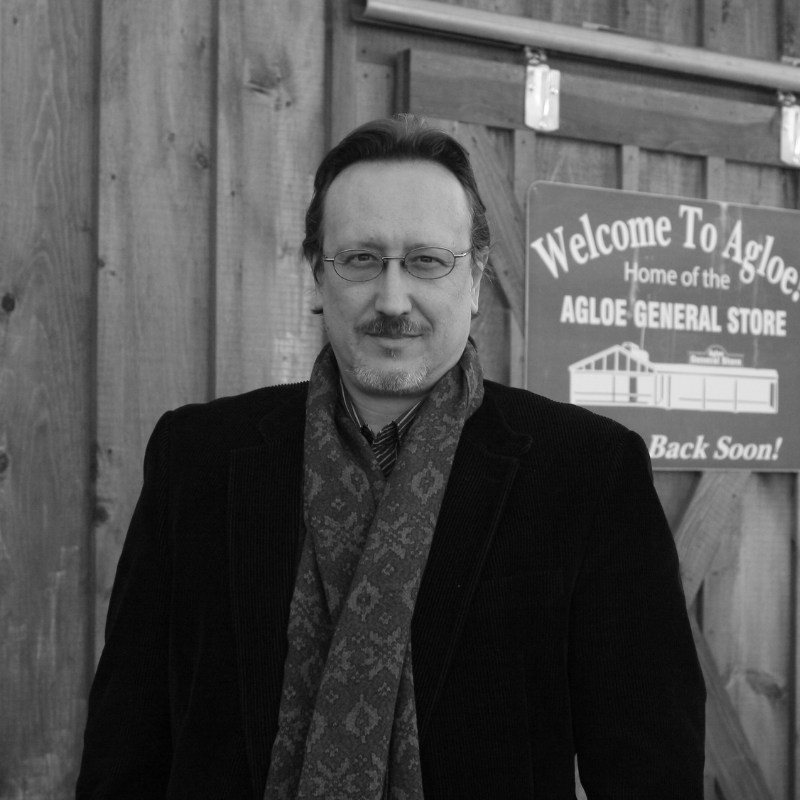
Stephen and David – RightsClick David and Stephen – RightsClick
Episode Guests
David Newhoff & Steven Tepp
Co-founders, RightsClick
David Newhoff is a copyright advocate and author with over a decade of experience writing about creators' rights. He has published more than 1,000 articles on his blog The Illusion of More and is the author of Who Invented Oscar Wilde? The Photograph at the Center of Modern American Copyright. His background spans film production, communications, and creator advocacy.
Steven Tepp has 25+ years of IP law and policy experience — including as an attorney for the U.S. Senate Judiciary Committee, senior counsel at the U.S. Copyright Office, and Chief IP Counsel at the U.S. Chamber of Commerce. He founded the IP consultancy Sentinel Worldwide and teaches copyright law at George Washington University Law School.
RightsClick Copyright Law IP Policy Creator Rights
🔒
Listener Offer
RightsClick — 3-Month Free Trial
Protect your photography and design portfolio with RightsClick. After the trial, $5.95/month. Use the code below at sign-up.
MYPHOTOSPMRE
Start Free Trial ↗

What Copyright Actually Protects — And What It Does Not

Most designers have a vague understanding that copyright protects their work — but the specifics matter enormously for how they share, document, and defend it. David and Steven clarify the fundamentals in terms of what copyright actually covers in the design and photography context.

Copyright protects original works of authorship — specifically, the unique way you arrange elements in a design or photograph. It does not protect concepts, styles, or ideas. It protects the specific, original expression of those ideas. For a designer, that means the specific arrangement of furniture, finishes, and elements in a completed project photograph can be protected. For a photographer, it means the specific composition, lighting, and framing of an image is protected — but the style or aesthetic alone is not.

"Copyright safeguards the unique ways you arrange elements in your designs and photos. Human authorship is still essential when it comes to protecting your work legally."

— David Newhoff & Steven Tepp, RightsClick

The critical implication for photographers who shoot completed design projects: who owns the copyright to those photographs is a legal question with a clear answer — and it is not automatically the designer. The photographer is typically the copyright owner of images they create, even if they were hired to shoot a design project. Designers who want to use those images freely — in portfolios, marketing, publications — need a written agreement that addresses ownership or licensing before the shoot, not after the images exist and a dispute has arisen.

Why Registration Is the Most Important Step You Are Probably Skipping

Copyright technically exists from the moment you create something original. But that automatic copyright provides very limited practical protection — specifically, you cannot sue for statutory damages or attorney's fees for works that were not registered before infringement occurred. Without those remedies, the cost of litigation often exceeds the value of winning, which means infringers operate with essentially no deterrent.

Registration changes that calculation. A registered work can be defended with statutory damages — up to $150,000 per work for willful infringement — which creates a genuine deterrent even for cases where proving actual financial harm is difficult. For designers and photographers who regularly create work that others might want to use without permission, registration is the mechanism that gives copyright teeth.

Bulk registration: The Copyright Office allows up to 750 unpublished works to be registered simultaneously in a single filing — making it practical for designers and photographers to protect large portions of their portfolio in one submission rather than registering individual images. RightsClick is specifically built to make this process manageable.

The time-sensitive aspect: registration must happen before infringement (or within three months of publication) to unlock the full range of statutory remedies. Registering after you discover your work has been used without permission means you have lost access to the most powerful enforcement tools. The practical implication: register regularly rather than reactively.

AI and Copyright — The Unsettled Questions

This is the part of the conversation that is most actively evolving and most consequential for designers using AI tools. David and Steven cover three distinct layers of the AI-copyright problem.

Who owns AI-generated content?
Current US copyright law requires human authorship for copyright protection. Content generated by AI — even when produced in response to a human prompt — is not considered to have a human author in the legally relevant sense, and therefore cannot be registered as copyrightable work. The Copyright Office has issued guidance on this: work that is entirely AI-generated is not eligible for copyright protection. Work that includes AI-generated elements may be partially protectable — specifically the portions that reflect human creative choices. The evolving guidance requires disclosure of AI involvement and limits protection to the human-authored elements.
What about the training data problem?
AI image generation models are trained on enormous datasets of existing images — including copyrighted work scraped from the internet without licensing agreements. This raises mass infringement questions that are currently being litigated in multiple jurisdictions. For designers, the practical question is whether using AI tools that were trained on potentially infringing data creates legal exposure for the designer using the tool — a question without a settled answer as of this recording.
Assistive AI vs. Generative AI — a meaningful distinction
David and Steven draw a line between assistive AI (tools that help a human create — spell checkers, retouching tools, AI-assisted editing) and generative AI (tools that create content from prompts). Assistive AI is generally unproblematic for copyright purposes: the human remains the author, the tool is an instrument. Generative AI is where the authorship questions arise — and where disclosure requirements are developing. Using AI as a creative tool is different from using AI as the creator.

What Designers Can Do Now — Practical Actions

Register your work. Use the Copyright Office's bulk registration option (up to 750 works per filing) or a tool like RightsClick to make regular registration part of your workflow. Register before infringement — not after.
Get photographer agreements in writing before the shoot. Specify who owns the copyright to project photography, what rights the designer has to use the images, and under what conditions — before the images exist, not after a dispute has arisen.
Disclose AI involvement in your creative work. The Copyright Office is developing and updating guidance on disclosure requirements. As a baseline practice, be transparent about when and how AI tools contributed to a deliverable — especially in client agreements and portfolio presentations.
Stay informed as the law evolves. Copyright law regarding AI is changing through legislation, Copyright Office guidance, and active litigation. What is legally murky today may be clarified within the next 12–24 months. Following sources like The Illusion of More and staying connected to professional design organizations that track legislative developments will help you stay current.
Use AI as a tool, not a creator. Maintaining human authorship and creative direction in your process is not just an ethical choice — it is the legal foundation for any copyright claim you might need to make. AI-assisted work where you made the meaningful creative decisions is protectable. Work where you served only as a prompt writer is not.
Frequently Asked Questions
It depends on what specifically you are asking about. As the designer, you may have copyright in the design itself — the original arrangement of elements you created — but copyright in photographs of that design typically belongs to the photographer who took them, not the designer whose work is depicted. This is a source of real legal dispute in the design industry. The practical solution: before any photographer shoots your project, have a written agreement that addresses copyright ownership, licensing terms, and the specific uses (portfolio, marketing, publication) you need the rights for. Without that agreement, your use of those images may be subject to the photographer's permission.
RightsClick is a platform founded by David Newhoff and Steven Tepp specifically to make copyright registration and management practical for photographers and visual creators. It simplifies the bulk registration process, helps track where images are being used online, and provides tools for managing rights and licensing. While it is built primarily with photographers in mind, interior designers who regularly photograph their work — or who want to register their design documentation — will find it relevant. The listener offer (code MYPHOTOSPMRE) provides a 3-month free trial followed by $5.95/month.
Not if they are purely AI-generated. Under current US Copyright Office guidance, content generated entirely by AI — without sufficient human creative control and authorship — is not eligible for copyright protection. You can potentially claim copyright in the portions of a work that reflect your human creative decisions, but not in the AI-generated elements themselves. The Copyright Office requires disclosure of AI involvement in registration applications and will assess the extent of human authorship on a case-by-case basis. The practical implication: do not represent AI-generated imagery as proprietary copyrighted work, and be transparent about AI involvement in any registration you file.
Automatic copyright gives you the right to claim ownership — but it does not give you the practical tools to enforce it. Without registration prior to infringement, you cannot recover statutory damages (up to $150,000 per work for willful infringement) or attorney's fees in a lawsuit. That means litigation costs typically exceed the value of winning, which makes enforcement financially impractical for most creators. Registration changes the math: with statutory damages available, the risk to an infringer is significant enough to deter casual infringement and provide real negotiating leverage when infringement is discovered. For designers with valuable portfolio images, the cost of bulk registration is modest compared to the protection it provides.
The US Copyright Office allows photographers and visual artists to register up to 750 unpublished works in a single filing — called a group registration of unpublished photographs. This dramatically reduces both the cost and time burden of protecting a large portfolio. Instead of registering each image individually (which would be prohibitively expensive), you can register hundreds of images in one submission. RightsClick is specifically designed to help creators prepare and manage these bulk submissions. The key eligibility requirements: all works in the group must be unpublished, all must be by the same author, and all must be works made for hire or all must not be made for hire. For designers who regularly photograph their work, setting up a quarterly bulk registration practice protects ongoing output efficiently.
Protect What You Create
RightsClick — Copyright Registration Made Manageable
3-month free trial. $5.95/month after. Use code MYPHOTOSPMRE at sign-up. Built by two of the country's leading copyright experts specifically for visual creators.


Disclaimer: This blog was written using AI as a recap from the recording then edited by the author for accuracy and details.

 
 
Previous
Previous

Ep 38: AI in Your Portfolio? How to Stay Ethical and Professional

Next
Next

Ep 36: A 2024 Chill Chat Recap on AI for Creative Pros